What is sentiment? It is the perceived value of an individual towards something.
Why do we need it? Cambridge Analyticca did that at the time of U.S. election to manipulate the voting. Is it?
In reality it is mainly used for understanding consumer or user perception towards brand/product/services etc.
How to do this Sentiment Analytics?
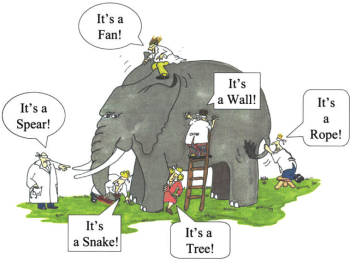
“I don’t like to invest in X brand’s fixed deposit scheme. It fetches lower interest compared to other brands.” – It’s a negative statement.
“Mutual fund is better than fixed deposit” – It’s a positive statement. But wait, the statement has a positive sentiment towards Mutual fund but negative sentiment towards fixed deposit.
Sentiment Analytics is as simple as that. It can be done by manually as well as in NLP algorithm.
If you see the conversation on social media, you can observe many of the post are complicated in nature. You will encounter with a post like “I am surprised by the mutual fund return” – In such cases no machine learning algorithms can detect whether it’s a positive/negative or neutral sentiment. All the social media analytics tool available in the market can only fetch 60-70% of the correct sentiment analytics results.
I will share the code of sentiment analytics in r in coming blogs. In my opinion at first one should start with manually to get the actual factsheet of a brand perception on social media channels.
Don’t you think it will take a huge time for manually analyse sentiment?
I know, it will take a good amount of time. But once you get comfortable with the social media mentions, you can filter the dataset with the list of keywords. Suppose you get a requirement from a client to do a competitor analysis for the month of June, 2019. And e.g. your client is HDFC bank. Let’s assume one crisis happened e.g. An employee got sacked due to his communal marks on social media – After this news broke out on social media, users flooded with tweets regarding boycotting HDFC bank services for terminating the employee.
Or else there could be a positive news such as HDFC bank donated for odissa fani incident – all this news drive the sentiment of a brand on social media.
Once you start analysing the dataset, you will get to see a pattern in it. So that you can do bulk tagging on the dataset in order to reduce the time.
What’s this outcome of the sentiment analytics results?
After you receive the sentiment analytics results for a brand, you can do a comparative analysis amongst the other brands to understand where your brand is standing in the market?
For a product level study, such as “Analysing conversations around Discount brokerage firms in India” – from the negative sentiment conversations a brand can understand the pain areas of consumers. Afterwards a brand can improve their services in those areas to get a competitive advantage as well as in product/service improvement.
There are many more use cases of sentiment analytics which I will update on the upcoming blogs. Stay tuned.
 Social Media Analytics